Sound as an anchor for meditation
Most meditation advice comes down to one thing: give your attention somewhere simple to land, and come back to it each time it wanders. A breath is the classic anchor. A sound can be one too, and for many beginners it is easier, because it is outside the head and does not need to be imagined.
The default mix here is a slow, recorded breathing rhythm with a little wind behind it. You do not have to match it. Let it sit in the background, notice when your mind has drifted to tomorrow’s emails, and return to the sound without scolding yourself. This is not therapy and makes no health promise; it is a quiet space you can open in a browser tab.
Singing bowl, breath and open air
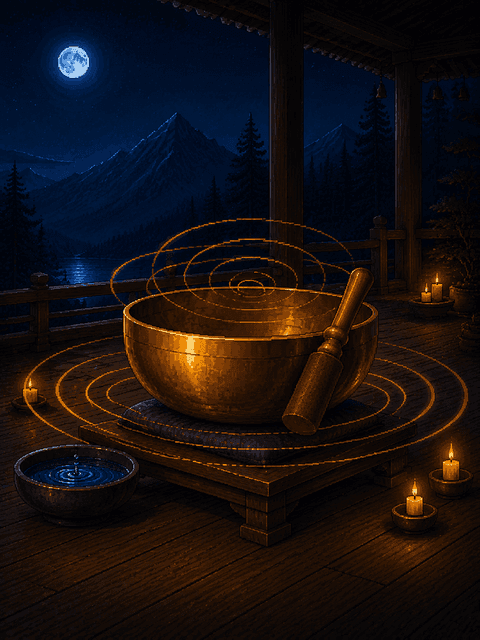
A singing bowl gives a clear tone that fades slowly, which suits a practice of following a sound until you can no longer hear it. Pair it with the breath for a classic sitting session, or with soft ocean waves for something more spacious.
If you prefer nature to instruments, try falling leaves and a small stream, or the sea below the lighthouse with the aurora overhead. Some people relax best with warmth rather than space: a low fire with distant crickets in the forest feels like the end of a long walk.
Short pauses during the day
You do not need half an hour or a cushion. Three to five minutes of sound between two tasks, with your eyes closed and your shoulders loose, is a real pause. Set a gentle volume, breathe out longer than you breathe in, and stop when the minutes are up. Back at the desk, the focus page has mixes for getting into work again.
In the evening, the same pause can be the first step of a bedtime routine. When you are ready to lie down, the sleep page picks up where this one ends.
Guided meditation or plain sound?
Guided recordings help when you are learning, because a voice tells you what to do. Once you know the basics, plain sound leaves more room: nobody counts for you, nothing ends after a set number of minutes, and the mix stays the same until you change it. Many people keep both and switch depending on the day.